Showing posts with label Pathology Test. Show all posts

Test for Bilirubin / Bile pigment in urine ( Fouchet's test for bilirubinuria )

Test for bilirubin / bile pigment in urine ( Fouchet's test )

Bilirubin is breakdown product of haemoglobin.
Normally no bilirubin passed in urine.

Apparatus

Test tube, 10% barium chloride, filter paper, dropper, fouchet's reagent, urine.

Principal

Oxidises bilirubin convert into green biliverdin with the help of ferric chloride.

Procedure

  • Take 10ml of urine in a test tube.
  • Add 3 -5 ml 10% barium chloride.
  • Filter through filter paper.
  • To precipitate on filter paper, add a few drops of fouchet's reagent. 
Fouchet's reagent = Ferric chloriode + Trichloroacetic acid

Result

Development of green colour indicates bilirubin.

Causes of bilirubinuria

  1. Obstructive jaundice
  2. Hepatocellular jaundice. 

Test for bile salts ( Hay's test )

Test for bile salts ( Hay's test )

Apparatus

Test tube (capacity 50 or 100ml), Sulphur powder, urine.

Principle

If bile salts present in urine lower the surface tension of the urine.

Procedure

  • Test tube fill  2/3 with urine.
  • Sprinkle finely sulphur powder over it.
Hay's test, test for bile salts, Aas, alfaaz-e-aas
Hay's test

Results

If bile salts present in urine then sulphur powder sinks, otherwise floats.

Cause for bile salts in urine

  • Obstructive jaundice

Test for ketonuria ( Rothera's test )

Test for ketonuria ( Rothera's test )

Apparatus

Test tube, Urine, Solid ammonium sulfate salt, Sodium nitroprusside, liquor ammonia.

Principle

Ketone bodies combine with alkaline solution of sodium nitroprusside formed purple complex.

Procedure

  • Take 5ml urine in a test tube.
  • Saturate it with solid ammonium salt, it will start settling to the bottom of the tube when it saturated.
  • Add a few crystals of sodium nitroprusside and shake.
  • Add liquor ammonia in test tube with the side of the inner wall.
Rothera's test, test for ketonuria, Aas, alfaaz-e-aas
Rothera's test

Results

Appearance of the purple coloured ring at the junction indicates presence of ketone bodies.

Causes of ketonuria

  • Diabetes ketoacidosis
  • Dehydration
  • Hyperemesis gravidarum
  • Fever
  • Cachexia
  • After general anaesthesia

Test for glucosuria ( Benedict's reagent test )

Test for glucosuria ( Benedict's reagent test )

Glucosuria is define is the excretion of sugar in urine.

Apparatus

Benedict's reagent, Test tube, Urine, Lighter, Candle,

Principle

Cupric ion reduced by glucose to cuprous oxide and a coloured precipitate is formed.

Procedure

  • In test tube take 5ml of benedict's reagent.
  • Add 8 drops or 0.5 ml urine.
  • Heat to boiling for two minutes.
  • Cool in water bath or running tap water.
  • Than look for colour change and precipitation.
Benedict's test, Aas,alfaaz-e-aas, test for glucosuria
Benedict's test

Results

Normally 130 mg / day glucose comes out with urine.
  • Blue colour (no change colour ) = Negative
  • Greenish colour                          = Traces ( less than 0.5 g /day ).
  • Green / cloudy green ppt            = + ( 0.5 - 1 g/dl ).
  • Yellow ppt                                  = ++ ( 1-1.5 g / dl ).
  • Orange ppt                                  = +++ ( 1.5 - 2 g / 100ml ).
  • Brick ppt                                     = ++++ ( more than 2 g / dl ).
Test for glucosuria, Benedict's test, Aas, alfaaz-e-aas
Semiquantitative interpretation

Causes


  • Diabetes mellitus
  • Renal glucosuria
  • Severe burns
  • Administration of corticosteroids
  • Severe sepsis
  • Pregnancy

Test for proteinuria ( Heat and acetic acid test )

Test for proteinuria (Test for protein in urine ) / Heat and acetic acid test

Apparatus 

Test tube, Acetic acid, Candle, Lighter, Test tube holder, Dropper, Urine.

Principle

Heat causes coagulation of protein.

Procedure

  • Take 5ml test tube.
  • Fill 2/3 with urine.
  • Now acidify urine by the adding a few drops of 3% acetic acid, if urine is alkaline.
  • Boil upper portion for two minutes ( boil upper portion because it can compare with the lower portion ).
  • If turbidity appears, add a few drops of 3% acetic acid
Test for proteinuria, Heat and acetic acid test, Aas, alfaaz-e-aas
Test for proteinuria


Results

If present...
  • No cloudiness                             = Negative
  • Faint cloudiness                          = Traces ( less than 0.1 g/dl ).
  • Cloudiness without granularity   = + ( 0.1 g /100ml ).
  • Granular cloudiness                     = ++ ( 0.1 - 0.2 g / 100ml ).
  • Precipitation and flocculation      = +++ ( 0.2 -0.4 g/100ml ).
  • Thick solid precipitation              = ++++ ( more than 0.5 g/100ml ).

Causes

Normally less than 150 mg/day protein comes with/in urine.

Mild proteinuria ( less than 1.0 gm/day ) occur in...

  • Hypertension
  • Polycystic kidney
  • Chronic pyelonephritis
  • UTI
  • Fever

Moderate proteinuria ( 1-3 gm/day ) is seen in...

  • Chronic glomerulonephritis
  • Nephrosclerosis
  • Multiple myeloma
  • Pyelonephritis

Heavy proteinuria ( more than 3gm/day ) occur due to...

  • Nephrotic syndrome
  • Renal vein thrombosis
  • Diabetes mellitus
  • SLE


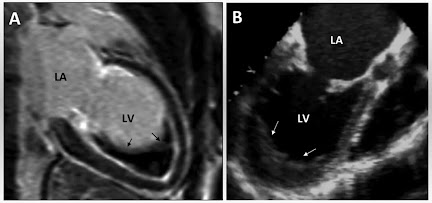
Endomyocardial Fibrosis